
The science behind MentorPRO Academy
Better prepared.
Better connected.
Training grounded in research on relationships, social capital and purposeful support.
Helping shape the field’s standards.
MentorPRO co-founder Jean Rhodes co-authored the fourth edition of MENTOR’s Elements of Effective Practice for Mentoring™ (EEPM), which helps define standards of practice for youth mentoring programs. Our team has also contributed to multiple EEPM supplements, extending this guidance to specific populations and program settings.
Meet the co-founder
A career devoted to mentoring.
Jean Rhodes is the Frank L. Boyden Professor of Psychology at the University of Massachusetts Boston and Director of the Center for Evidence-Based Mentoring. She has published more than 250 peer-reviewed articles on mentoring and youth development and received the American Psychological Association’s Urie Bronfenbrenner Award. She edits the Chronicle of Evidence-Based Mentoring.
Her sister and co-founder Nancy McNamara is a computer scientist who has built secure software since Xerox PARC and founded Academic Web Pages in 2002.
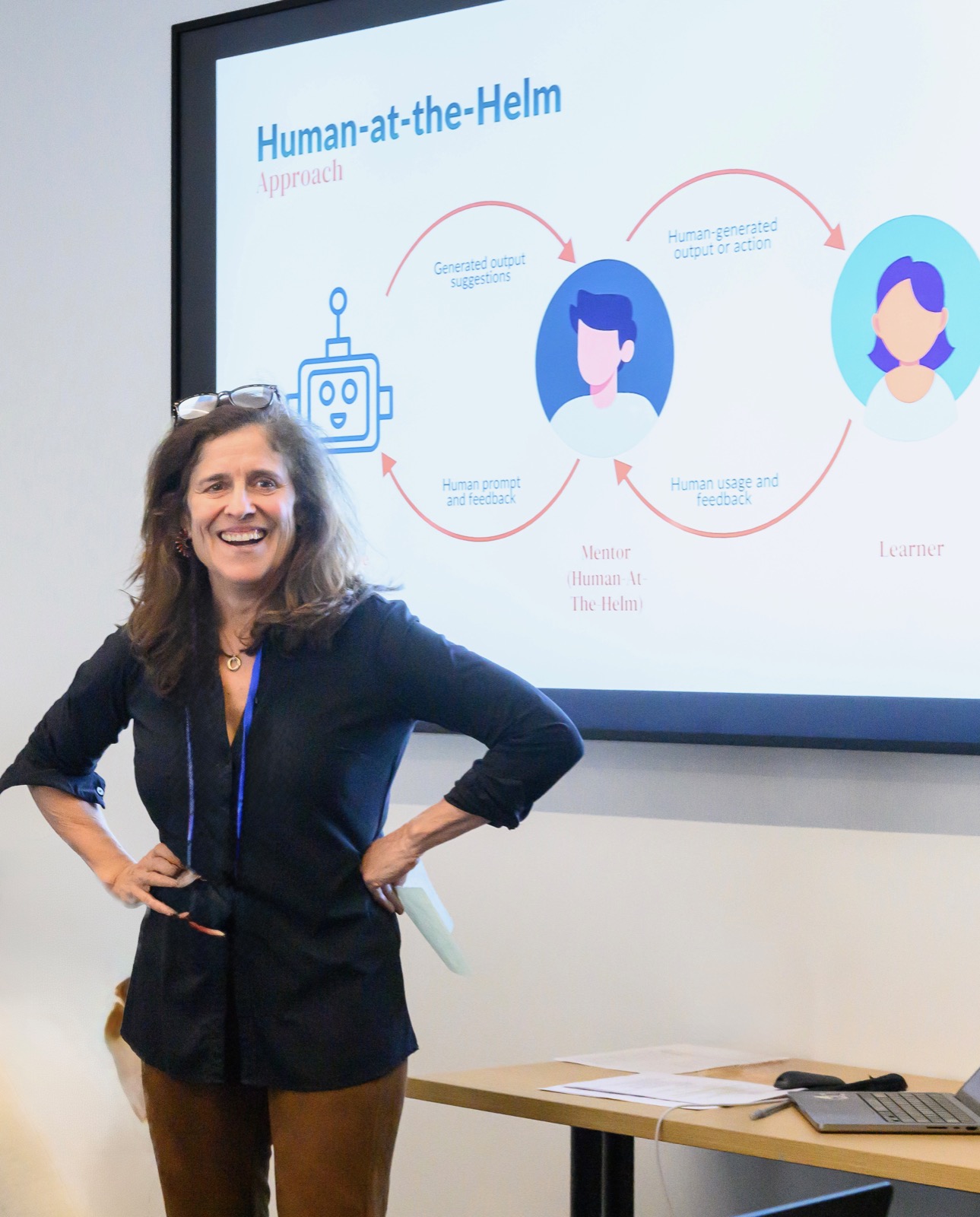
Hear from our co-founder
Jean Rhodes on the science behind MentorPRO Academy
The research behind the platform and its approach to mentoring.
What the research says
Three principles of effective mentoring
Mentoring is most effective when it is
1
Delivered by credible, trained mentors
A meta-analysis of cross-age peer mentoring found positive youth outcomes. Programs with more adult oversight and supervision had larger effects.
(Burton et al., 2022)
How the Academy applies this
MentorPRO Academy provides training for mentors, mentees and program staff.
2
Focused on specific challenges and goals
Across 48 studies, targeted mentoring programs had an average effect size of 0.25, compared with 0.11 for non-specific approaches.
(Christensen et al., 2020)
How the Academy applies this
Goal-setting and supportive-accountability courses help mentors bring structure and purpose to their conversations.
3
Expanding participants’ social capital
A meta-analysis of 14 studies found that youth-initiated mentoring was associated with positive outcomes. This approach helps young people identify and recruit supportive adults.
(van Dam et al., 2021)
How the Academy applies this
Connected Futures teaches participants how to identify, reach out to and build relationships with people who can support their goals.
These studies inform the practices taught in the Academy. They do not evaluate individual Academy courses. Course-related evaluations and their findings appear in the research library.
Research into practice
What the evidence tells us.
Course evaluations and research on the practices we teach. Each study identifies what was tested and what the findings can tell us.
8 peer-reviewed evaluations
Connected Futures was adapted from Connected Scholars. The course studies below tested the semester-long Connected Scholars curriculum, not every current Academy format. About the curriculum’s origins ↗
Connected Futures · 2023 — Teaching to fish: Impacts of a social capital intervention for college students
What the study found
A one-credit Connected Scholars course improved help-seeking, mentoring support and academic self-efficacy.
Study context
Academic findings were mixed. There was no GPA effect, and cognitive engagement decreased. The trial evaluated the semester-long course, not the current self-paced Academy formats. Related training →
Schwartz, S., Parnes, M., Browne, R., Austin, L., Carreiro, M., Rhodes, J., Kupersmidt, J., & Kanchewa, S. (2023). Teaching to fish: Impacts of a social capital intervention for college students. American Educational Research Journal, 60(5), 986–1022. Read study ↗
Connected Futures · 2026 — Testing the effects of a social capital intervention on college student retention and academic success
What the study found
Passing Connected Scholars was associated with 3.42 times the odds of four-year graduation and 1.96 times the odds of two-year retention.
Study context
Adjusted observational associations, not causal effects or probability ratios. The retention analysis concerned students taking the course as underclassmen. No significant difference in cumulative GPA at graduation. The study evaluated a semester-long course. Related training →
Hersch, E., Werntz, A., Schwartz, S. E. O., Raposa, E. B., Hughes, J., Parnes, M. F., & Rhodes, J. (2026). Testing the effects of a social capital intervention on college student retention and academic success. American Journal of Community Psychology, 77(1–2), 273–290. Read study ↗
Goal setting · 2026 — Can I help with that? The role of goal setting in a technology-enabled peer mentoring program
What the study found
Goal setting was associated with higher academic self-efficacy and life satisfaction after accounting for platform engagement.
Study context
This study examined MentorPRO goal-feature use, not the SMART Goals course. The GPA association was not significant after adjusting for platform engagement. Related training →
Hersch, E., Werntz, A., Deng, Y., Jasman, M., & Rhodes, J. (2026). Can I help with that? The role of goal setting in a technology-enabled peer mentoring program. Journal of Community Psychology, 54, e70115. Read study ↗
Targeted mentoring skills · 2020 — Non-specific versus targeted approaches to youth mentoring: A follow-up meta-analysis
What the study found
Across 48 studies, targeted programs had an average effect size of 0.25, compared with 0.11 for non-specific approaches.
Study context
A comparison of mentoring programs, not an evaluation of Academy courses. Program differences do not isolate the effects of training alone. Related training →
Christensen, K. M., Hagler, M. A., Stams, G. J., Raposa, E. B., Burton, S., & Rhodes, J. E. (2020). Non-specific versus targeted approaches to youth mentoring: A follow-up meta-analysis. Journal of Youth and Adolescence, 49, 959–972. Read study ↗
Relationship building · 2023 — Striking the balance: The relative benefits of goal- and youth-focused approaches to youth mentoring relationships
What the study found
In 2,165 young people, both youth-focused and goal-focused approaches were associated with greater relationship closeness.
Study context
Goal focus was also associated with more tension, while youth focus was associated with less. Findings support balancing goals with mentees’ voice, not goals at any cost. Related training →
Werntz, A., Poon, C. Y. S., & Rhodes, J. E. (2023). Striking the balance: The relative benefits of goal- and youth-focused approaches to youth mentoring relationships. Journal of Youth and Adolescence, 52, 1448–1458. Read study ↗
Mentor preparation and support · 2022 — Cross-age peer mentoring for youth: A meta-analysis
What the study found
Six cross-age peer mentoring studies showed an overall effect size of 0.45. Programs with more adult oversight and supervision had larger effects.
Study context
A small evidence base focused on cross-age youth mentoring. It does not isolate mentor training or establish Academy course effects. Related training →
Burton, S., Raposa, E. B., Poon, C. Y. S., Stams, G. J. J. M., & Rhodes, J. (2022). Cross-age peer mentoring for youth: A meta-analysis. American Journal of Community Psychology, 70(1–2), 211–227. Read study ↗
Supportive accountability · 2023 — Providing human support for the use of digital mental health interventions: Systematic meta-review
What the study found
A review of 31 meta-analyses found that 22 of 45 effect estimates significantly favored human-supported digital mental health interventions.
Study context
Four estimates favored unsupported interventions, and the rest showed no significant difference. Results varied, with no clear conclusion about provider training. This was not an Academy course trial. Related training →
Werntz, A., Amado, S., Jasman, M., Ervin, A., & Rhodes, J. E. (2023). Providing human support for the use of digital mental health interventions: Systematic meta-review. Journal of Medical Internet Research, 25, e42864. Read study ↗
Youth mental health · 2022 — Paraprofessional youth mentoring: A framework for integrating youth mentoring with helping institutions and professions
What the study found
Proposes competency-based training, professional supervision and documentation as foundations for paraprofessional youth mentoring.
Study context
A framework, not an effectiveness trial. Course completion does not replace clinical qualifications or supervision. Related training →
McQuillin, S. D., Hagler, M. A., Werntz, A., & Rhodes, J. E. (2022). Paraprofessional youth mentoring: A framework for integrating youth mentoring with helping institutions and professions. American Journal of Community Psychology, 69(1–2), 201–220. Read study ↗
Meet the co-founder
Helping shape the field’s standards.
Jean Rhodes co-authored MENTOR’s fourth edition of Elements of Effective Practice for Mentoring and the ethical principles in First Do No Harm.
Practice standards
Elements of Effective Practice for Mentoring
The fourth edition sets out standards for recruitment, screening, training, matching, ongoing support and closure.
Garringer, M., Kupersmidt, J., Rhodes, J., Stelter, R., & Tai, T. (2015). Elements of effective practice for mentoring (4th ed.). MENTOR. Read the standards ↗
Ethics for the field
First Do No Harm
Ethical principles for safe, responsible mentoring relationships. This work informs the Academy’s training on ethical challenges.
Rhodes, J. E., Liang, B., & Spencer, R. (2009). First do no harm: Ethical principles for youth mentoring relationships. Professional Psychology: Research and Practice, 40(5), 452–458.
Research into practice
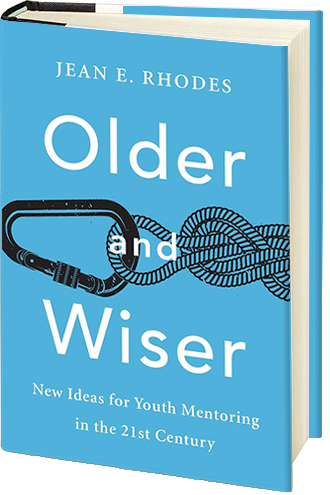
Older and Wiser
New Ideas for Youth Mentoring in the 21st Century
Jean E. Rhodes
Published by Harvard University Press
Drawing on more than thirty years of research, Rhodes examines what makes mentoring effective and how programs can provide more purposeful, skill-focused support.
2023 Eleanor Maccoby Book AwardWinner · American Psychological Association, Division 7
“This engaging and well-written book is a significant advance in our understanding of when and how mentoring matters.”
Robert D. PutnamAuthor of Our Kids
“The author’s concrete recommendations will create new pathways to opportunity for youth in greatest need.”
Michael D. SmithMy Brother’s Keeper Alliance
“Rhodes has demonstrated why she is regarded as the foremost authority on youth mentoring in the U.S. and internationally.”
Richard M. LernerTufts University
Bring the research to your program.
Let’s find the training that fits your learners.